
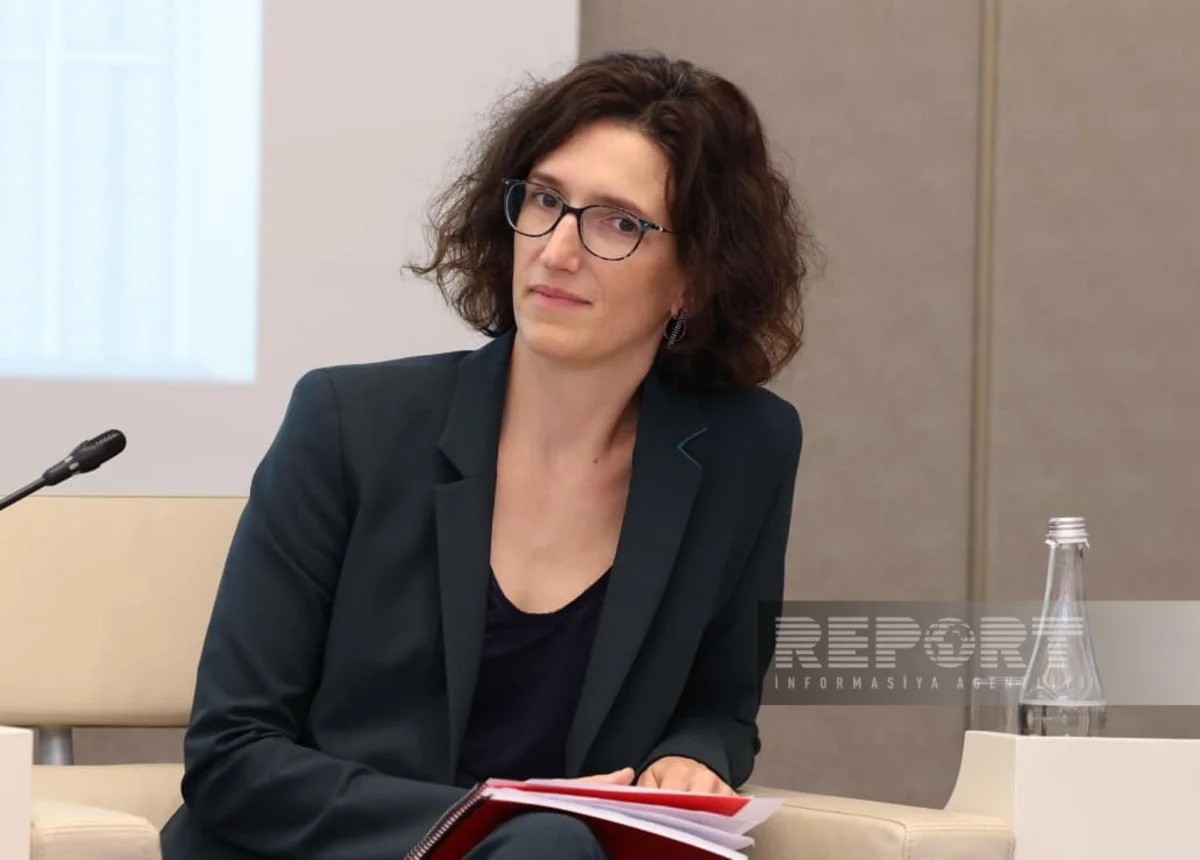
Building physical infrastructure is only one part of developing cross‑border green energy corridors, as such projects risk losing their commercial appeal without parallel development of regulatory and institutional frameworks, said Claire Marion Nicolas, Senior Energy Economist at the World Bank's Energy Sector Management Assistance Program (ESMAP), during a panel discussion at Baku Climate Action Week 2026 (BCAW 2026), Report informs.
Nicolas said experience from many regions had shown that building interconnectors and overcoming technical barriers was often the less difficult part of the process.
"The much harder task is creating a comprehensive ecosystem that allows electricity to flow seamlessly across national borders," she said.
According to Nicolas, full integration requires coordinated action in several areas, including common market rules, operational coordination, harmonised regulatory frameworks, and reliable mechanisms for certifying the origin of green electricity.
She highlighted the emerging electricity corridor stretching from Central Asia through the South Caucasus, Türkiye, and the Black Sea region to the European Union.
"For initiatives of this scale, it is essential to develop the technical and regulatory infrastructure simultaneously. If we limit ourselves to building transmission lines, we may achieve physical connectivity, but the commercial value could be lost," Nicolas said.
https://report.az/en/energy/world-bank-green-energy-corridors-need-more-than-physical-infrastructure