
The Caspian-Black Sea-Europe Green Energy Corridor project is currently at the stage of preparing tender documentation and developing a roadmap for reaching a final investment decision (FID).
The project aims to facilitate the transmission of renewable electricity generated by wind, solar and hydropower plants in Azerbaijan and Georgia to European Union countries.
Once fully operational, the corridor is expected to have a total transmission capacity of 3.9 GW. Its technical infrastructure will comprise three independent high-voltage direct current (HVDC) transmission systems, each equipped with voltage source converters (VSC) operating at ±525 kV and providing a capacity of 1,300 MW.
The first phase is scheduled for commissioning in 2032. It will follow the Baku–Ksani–Anaklia–Constanta South route, extending overland to the Albertirsa substation near Budapest, Hungary. The transmission line will have an approximate length of 3,040 km and a capacity of 2,000 MW.
The second phase, planned for 2036, will cover the Baku–Tskaltubo–Poti–Domnesti (Romania) route, with a total length of approximately 2,340 km.
The third phase is expected to become operational in 2040. This section will follow the Baku–Tskaltubo–Poti–Constanta South route and extend for approximately 2,020 km.
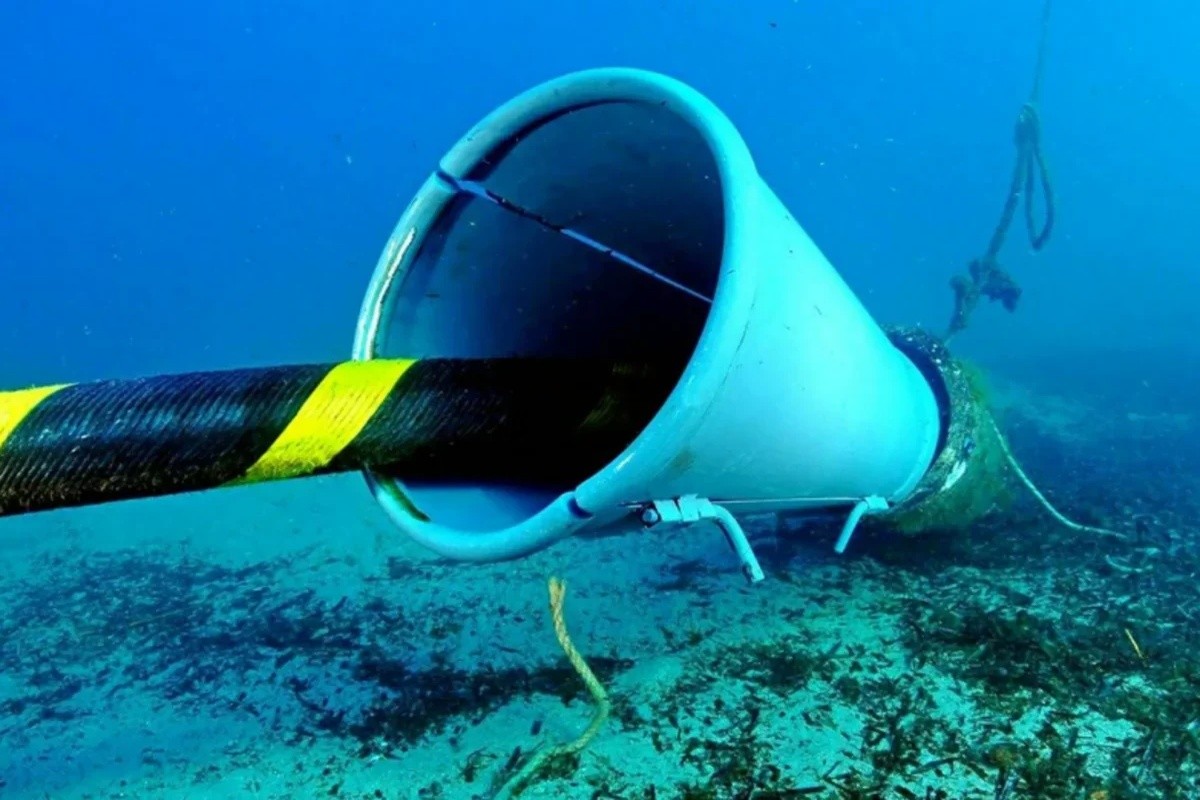
The subsea sections of all three transmission lines will cross the Black Sea from the Georgian coast to Romania. Each subsea cable section will be approximately 1,120 km long, with installation depths reaching up to 2,200 meters.
Onshore converter stations in Ksani and Tskaltubo, Georgia, will enable bidirectional integration of the corridor with the country's national electricity grid. This infrastructure will allow Georgia to export surplus electricity and import power when necessary.
The corridor has been included in the European Network of Transmission System Operators for Electricity (ENTSO-E) Ten-Year Network Development Plan 2026 under project identification numbers 1248 and 1244.
As part of the feasibility study, CESI also assessed the possibility of constructing a parallel pipeline to transport green hydrogen from Azerbaijan to Hungary. The proposed pipeline would extend approximately 3,000 km, including a 1,115 km subsea section. Its estimated cost ranged from €6.6 billion to €13 billion.
However, following the assessment, project participants decided to prioritize electricity transmission and temporarily suspend the implementation of the hydrogen component.
The main reasons behind this decision include significant downward revisions to European hydrogen import demand forecasts through 2040, as well as the higher economic efficiency of HVDC electricity transmission systems.
Nevertheless, the hydrogen pipeline remains a potential option for future development and may be reconsidered as the European Union's hydrogen market evolves.
The Agreement on Strategic Partnership in the Development and Transmission of Green Energy between Azerbaijan, Georgia, Romania and Hungary was signed in Bucharest on December 17, 2022, with the support of the European Commission.
https://report.az/energetika/black-sea-energy-cable-uzre-yekun-investisiya-qerarinin-qebul-edilmesi-ucun-yol-xeritesi-hazirlanir